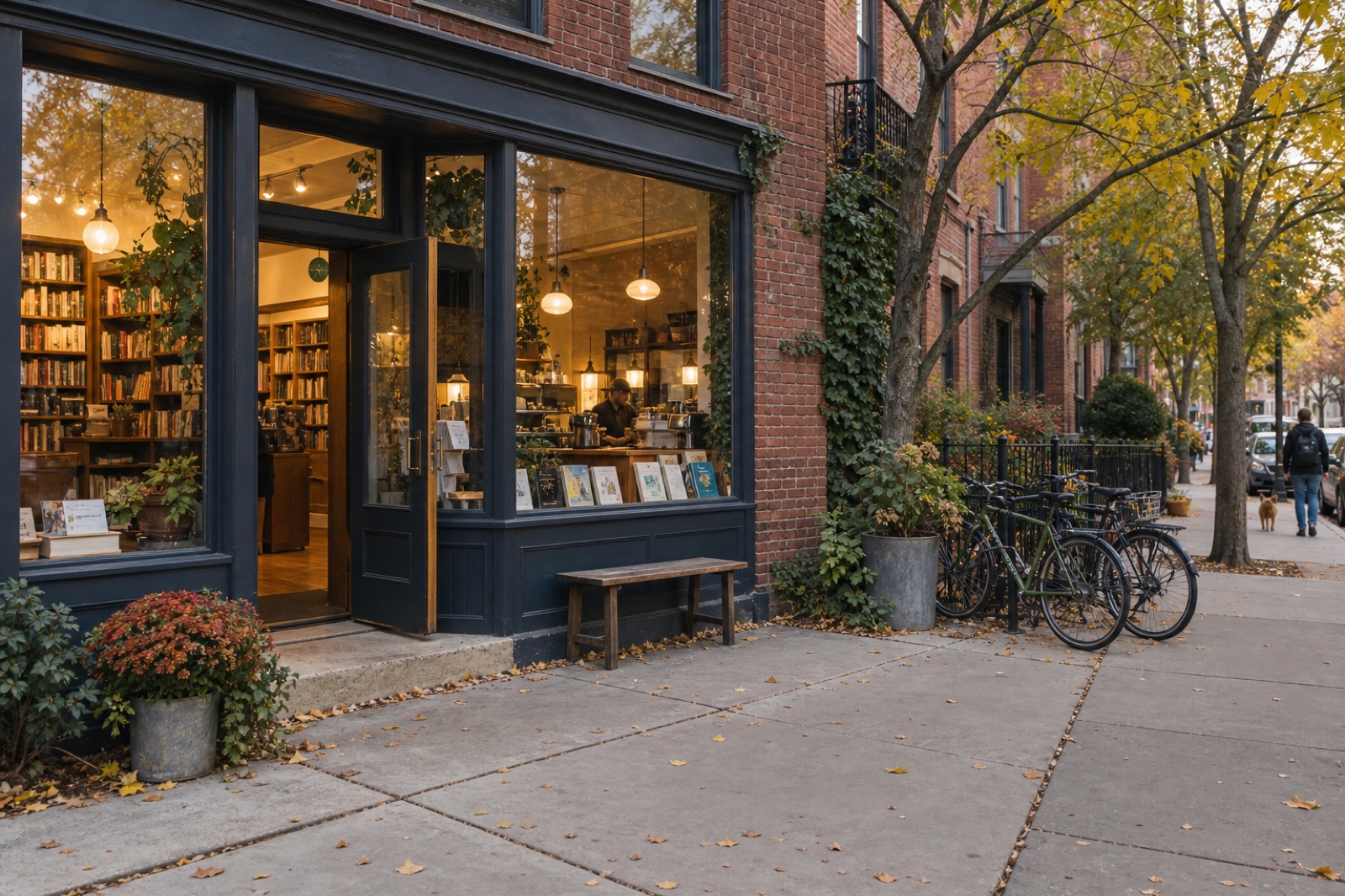
The afternoon began without a destination. That was the point. A neighborhood is difficult to understand when every block is only the space between saved locations.
I started with a coffee and the window seat of a small bookshop. Outside, bicycles leaned against a railing, a delivery driver stacked empty crates, and leaves gathered in the corners of the sidewalk.
Stay for the second hour
The first hour in a new place is mostly comparison. By the second, the eye settles. You notice which door people hold open, where dogs stop, and how the light moves across the same brick facade.
There is no shortcut to that kind of context. It asks for a bench, an unhurried lunch, and the willingness to see repetition as information rather than delay.
A place, not a checklist
Four hours later, I had not completed anything. I had a few notes, a paperback, and a better sense of how the street held together. That felt like enough—and more useful than another finished list.
Back to the journal