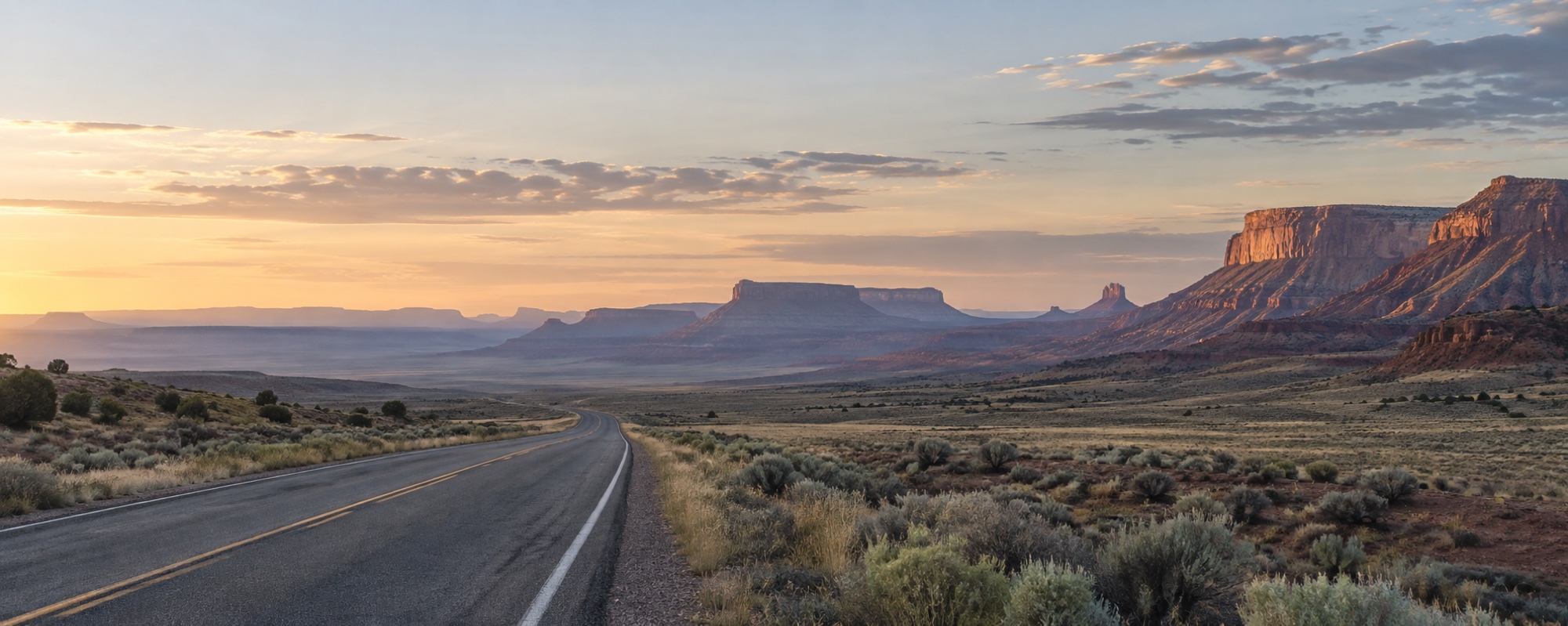
At 6:14 the road had not yet decided what color it wanted to be. The center line was pale gold, the asphalt blue, and the mesas ahead were still holding the night. I pulled over at mile 19 because the view felt less like a landmark than a pause.
The useful thing about an early start is not distance. It is the temporary absence of urgency. A route that looks like a line on a screen becomes a series of small conditions: cold air at the fuel stop, rabbits in the shoulder grass, a thin shelf of cloud catching light from below.
One anchor, plenty of margin
The day had one fixed point: water by noon. Everything else could move. That meant ten unhurried minutes at a quiet turnout and enough time to read the small interpretive sign twice. It meant stopping before a view became famous and walking far enough from the car to lose the engine noise.
Planning less does not mean arriving unprepared. Water, weather, fuel, and daylight still set the edges. Inside those edges, a little margin becomes the most useful thing you carry.
The return of scale
By seven, the warm light had reached the rock faces. Distances sharpened. The road bent left and disappeared into low sage. Nothing dramatic happened, which is precisely why the morning stayed with me.
The best travel notes are often records of proportion: a wide sky, a narrow road, and one person with enough time to notice both.
Back to the journal