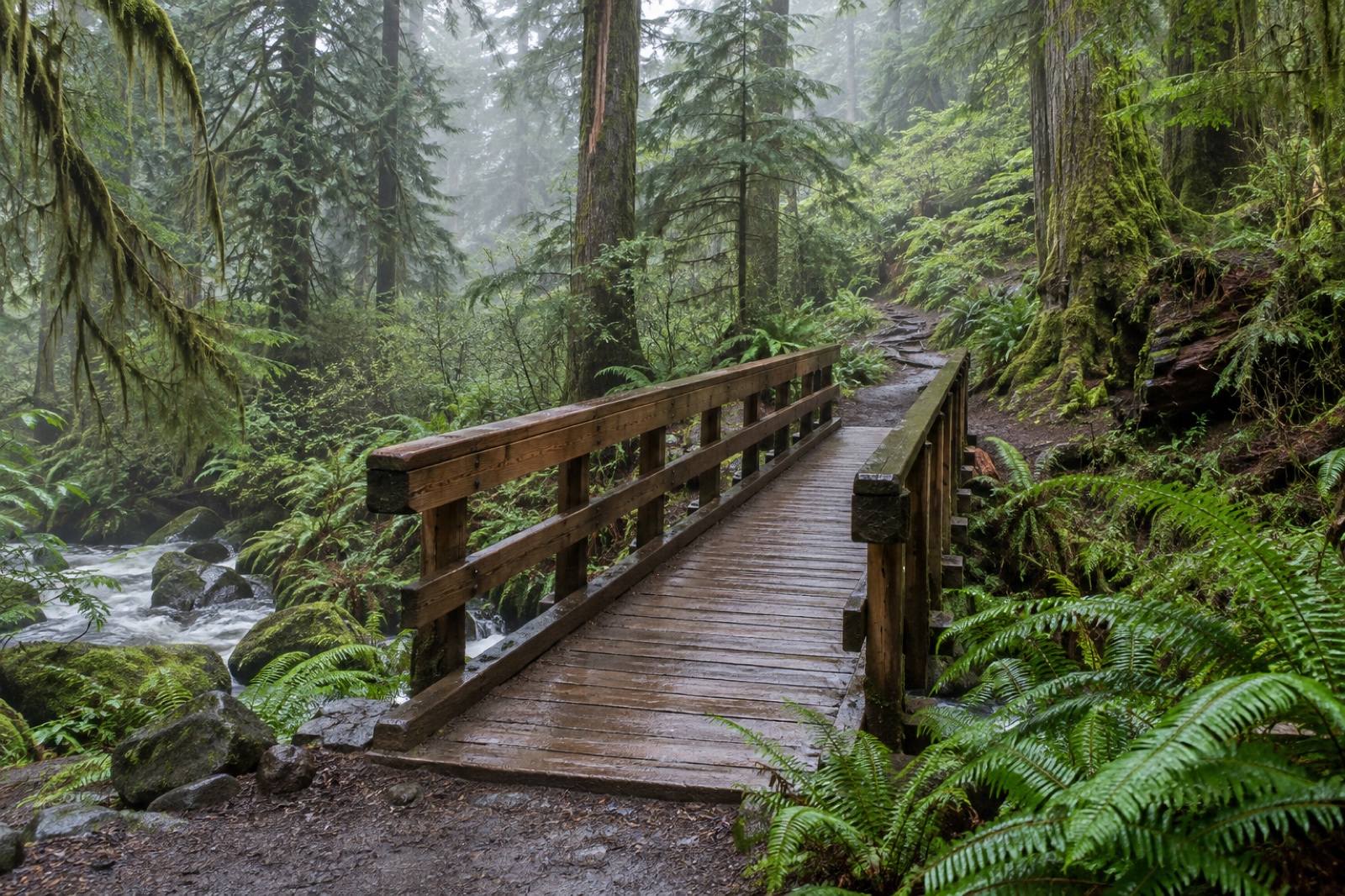
Rain had stopped twenty minutes before I reached the bridge, but the forest was still releasing it. Drops collected at the tips of sword ferns, fell from cedar boughs, and marked the creek in widening circles.
The bridge itself was ordinary: wet boards, dark rails, a few leaves pressed flat by passing boots. Its usefulness made it beautiful. Someone had carried the lumber in, measured the span, and returned to replace what weather had worn away.
Walk where the path is
After rain, the temptation is to step around every puddle. Enough people doing that can widen a narrow trail into a scar. The better choice is usually the simple one: slow down, accept the mud, and stay on the durable surface already made for travel.
That small adjustment changes the walk. Instead of searching for a clean route, you begin noticing how water moves, where roots hold soil, and why the path bends before the creek.
What the rain leaves behind
By the return crossing, mist had lifted into the canopy. The bridge looked less like an object and more like an agreement: cross here, move gently, and let the creek keep its edges.
Back to the journal