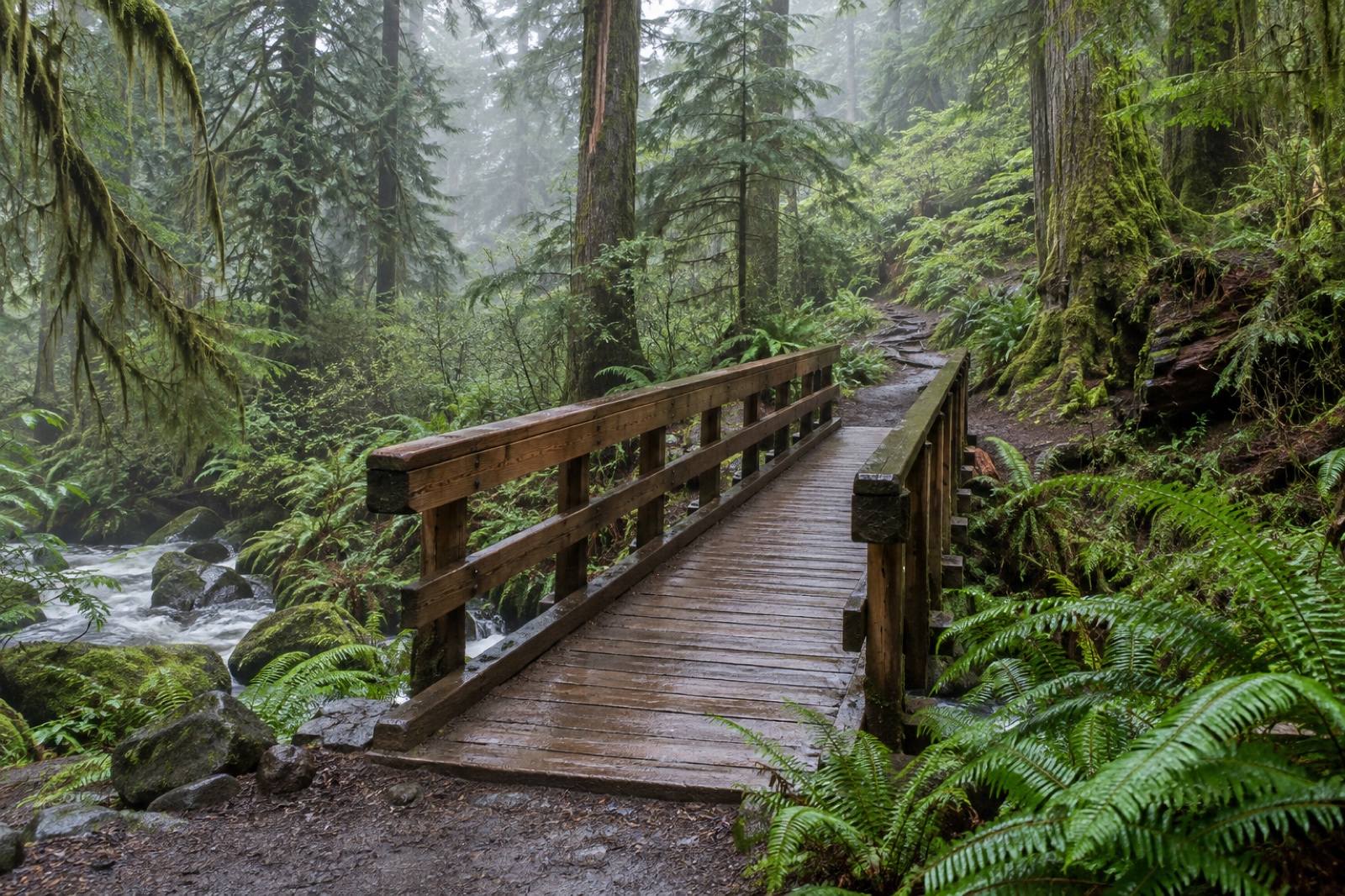
Good trail etiquette is mostly an exercise in noticing that you are not alone—even when no one else is visible.
Before the trailhead
Check current closures and conditions. Carry water, weather protection, and a simple way to navigate without depending on reception. Choose a route that fits the slowest person in the group.
Make passing easy
When someone approaches, choose a stable place to pause without stepping onto vegetation. A brief greeting makes intentions clear. If you are moving faster, ask before passing rather than appearing suddenly at a shoulder.
Let quiet be part of the place
Headphones and conversation travel farther than expected in open country. Keeping volume low gives wildlife, other visitors, and your own attention more room.
Carry the habit home
The same instincts work beyond a trail: use the durable route, make space, and leave less evidence than you found.
All field guides