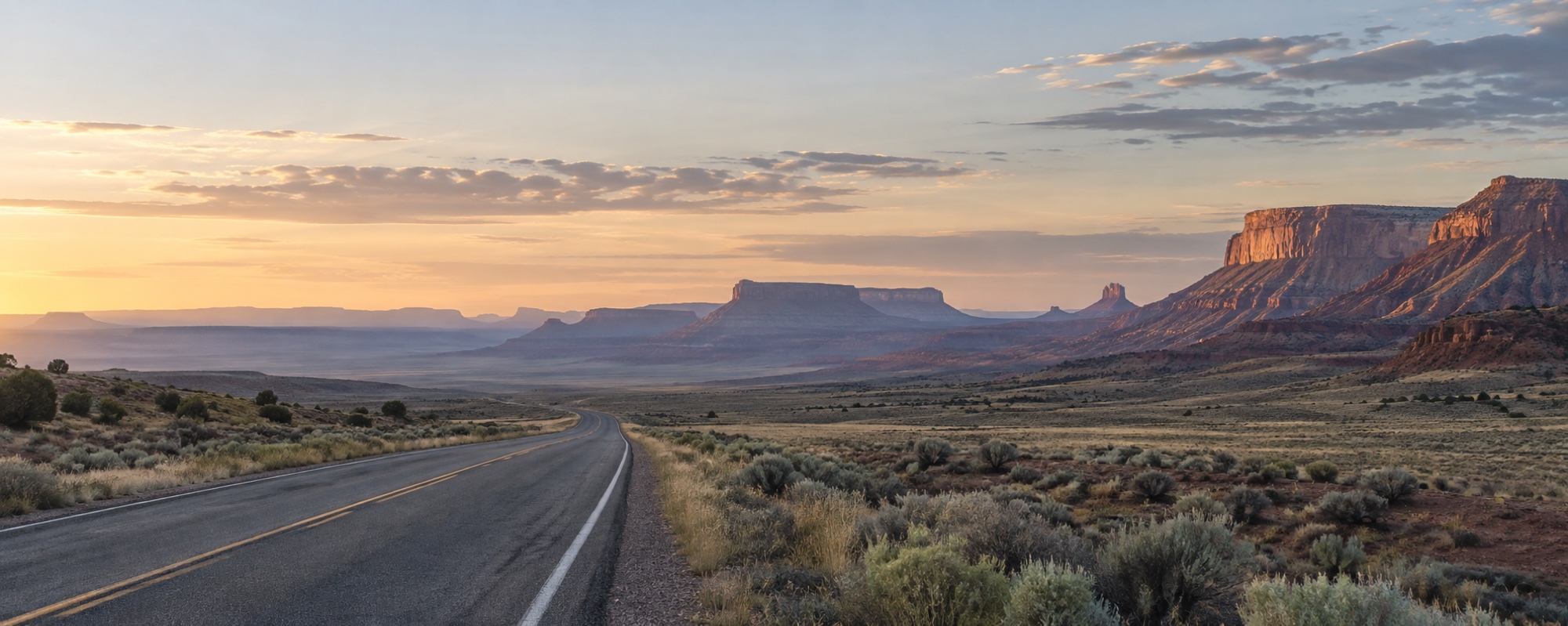
A good road day is not the one that covers the most ground. It is the one that leaves enough attention for the ground you cover.
Choose one anchor
Pick the place or commitment that genuinely sets the day: a trailhead, a meal, a ferry, or a room for the night. Treat everything else as optional. This keeps one late stop from turning the whole route into a race.
Count daylight, not just miles
Distance estimates rarely include weather, road work, a long fuel stop, or the pullout that is unexpectedly worth twenty minutes. Build the plan around the available light and add a generous margin.
Stop before you need to
A short walk every ninety minutes makes the day feel larger and the driving safer. Choose public turnouts and established stops; avoid fragile shoulders and private access roads.
Write down one thing
At the end of the day, note the weather, the best unplanned stop, and one detail you would otherwise forget. That is usually more valuable than a perfect timeline.
All field guides